
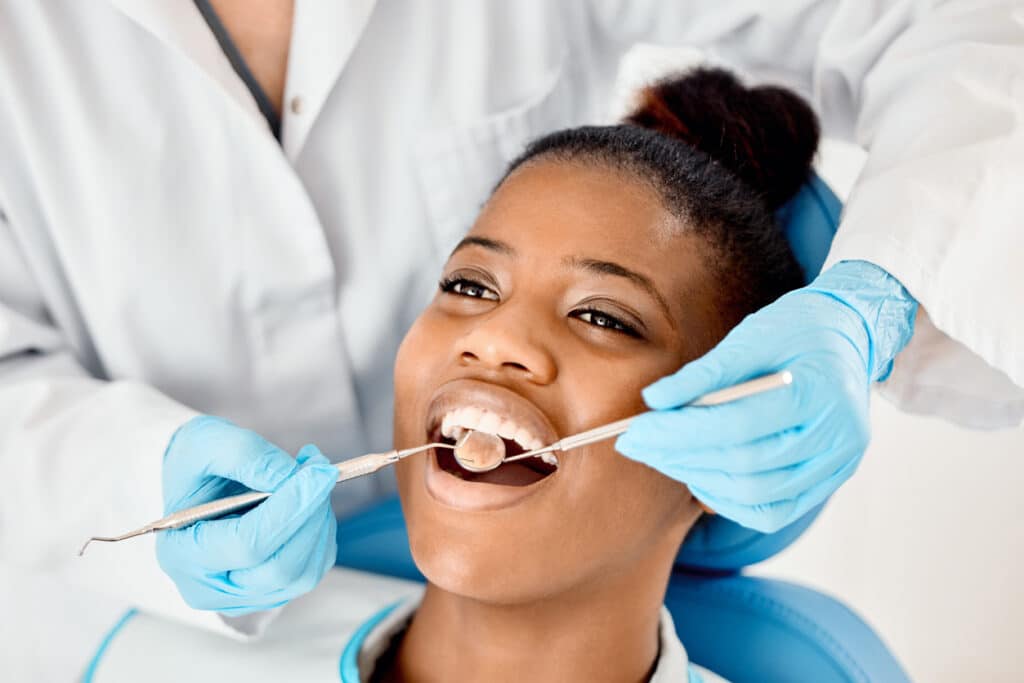
A regular dental cleaning at Goldsboro Family Dental focuses on removing sticky plaque and minor stains strictly above the gumline to maintain oral health. In contrast, a deep cleaning (scaling and root planing) is a targeted medical therapy that removes hardened bacterial deposits trapped deep below the gums, helping stop active bone loss. Clinical literature supports that a deep dental cleaning is one of the most common ways to remove plaque and bacteria underneath the gums [1] (Clinic, 2024).
Why Genetics and Anatomy Matter
Hearing you need advanced periodontal treatment often feels frustrating, especially if you follow a strict daily brushing routine. You might wonder what you did wrong. The truth is, your daily habits are only part of the equation. Your genetics, specific tooth anatomy, and even natural hormonal changes play a major role in how your body reacts to oral bacteria. Clinical evidence indicates that immune fitness factors for periodontal disease include genetic factors, lifestyle, and comorbidities [2] (Loos et al., 2020). Some people are simply predisposed to a highly aggressive inflammatory response, meaning their bone deteriorates faster than others. At Goldsboro Family Dental, we look at your unique biological factors and provide the precise, targeted care your body needs to stabilize.
The Hidden Health Risks of Ignoring 4-Millimeter Pockets
When your hygienist finds deep pockets, it means bacteria have successfully breached your primary defense system. These spaces act as a direct, open gateway to your bloodstream. Left untreated, this specific type of oral bacteria travels continuously throughout your body, raising your systemic inflammation. Current clinical data support that periodontal disease is able to predispose to vascular disease due to subgingival microbial species and the host response [3] (AlJehani, 2014). Choosing to proceed with a prescribed deep cleaning does much more than save your natural teeth; it proactively protects your cardiovascular and metabolic health.
Treatment Comparisons: Which Path Are You On?
Understanding the specific goals of your prescribed treatment helps you budget and plan effectively. Here is how these two distinct paths compare:
Treatment Type | Primary Clinical Trigger | Cost Estimate (Without Insurance) | Durability / Frequency | Maintenance Level |
Regular Cleaning (Prophylaxis) | Pocket depths of 1–3 mm; no active bleeding. | $100 – $150 | Every 6 Months | Low (Daily brushing and flossing) |
Deep Cleaning (Scaling & Root Planing) | Pocket depths of 4+ mm; active bone loss and tartar. | $200 – $350 (per quadrant) | Active Disease Control (Years if maintained) | High (Requires strict home care) |
The 30-Day Healing Timeline After Root Planing
In the first 24 to 48 hours following your procedure, you may experience mild soreness or a slight sensitivity to cold drinks. This is a normal, temporary part of the healing process. By the end of the first week, the active swelling in your gums will drastically drop. You will notice your tissue looking firm and pink instead of red and puffy. Around the 30-day mark, your gums will begin to tightly reattach to the freshly smoothed tooth roots. This critical reattachment shrinks your pocket depths and physically locks out new bacteria.
Boosting Your Healing: The Role of Localized Antibiotics
Sometimes, mechanical scaling needs a little extra help to eradicate stubborn, aggressive bacteria. To ensure the best possible outcome, your dentist may recommend placing a targeted, localized antibiotic directly into your deepest pockets immediately after your cleaning. This specialized medicine slowly releases over several days, actively destroying any lingering microscopic bacteria right at the source of the infection. This extra step dramatically improves your tissue reattachment rates. It gives your gums the exact defense they need to heal without requiring you to take traditional, full-body oral antibiotics.
Upgrading Your Routine: Targeted Home Care After Periodontal Therapy
A deep cleaning successfully resets the foundation of your smile, but your daily habits at home dictate your long-term success. Standard brushing alone is no longer enough once you have a documented history of bone loss. Before you leave the clinic, we will help you build a targeted, daily defense plan. This often includes upgrading to a high-quality water flosser, which safely flushes out bacteria from the deep spaces that regular string floss cannot reach. We may also prescribe a specialized antimicrobial mouthrinse to use during your initial recovery phase. By adjusting your tools, you actively protect your newly healed gums and secure your financial investment.
FAQs
1. Will my teeth feel loose after a deep cleaning?
If you had a severe buildup of hardened tartar, that calculus may have been artificially holding your teeth in place. Once we remove the infection, you might notice a slight, temporary mobility. As your gums heal and tighten back around the clean root, this sensation typically resolves.
2. How quickly can I resume normal eating after scaling and root planing?
You should wait until the local anesthesia completely wears off before eating, usually about two to three hours, to prevent accidentally biting your cheek or lip. Stick to softer foods for the first 48 hours to give your sensitive gums a chance to rest.
3. Can I ever go back to standard six-month cleanings after a deep cleaning?
Periodontal disease is manageable but generally not curable. Once you complete a deep cleaning, you will transition to “periodontal maintenance” visits every three to four months. This ongoing schedule prevents the aggressive bacteria from returning and protects the healthy foundation we built together.
References
[1] Clinic, C. (2024). Tooth scaling & root planing: Deep-cleaning treatments. In Cleveland Clinic. https://my.clevelandclinic.org/health/treatments/23983-tooth-scaling-and-root-planing
[2] Loos, B. G., & Van Dyke, T. E. (2020). The role of inflammation and genetics in periodontal disease. Periodontology 2000, 83(1), 26–39. https://doi.org/10.1111/prd.12297
[3] AlJehani Y. A. (2014). Risk factors of periodontal disease: review of the literature. International journal of dentistry, 2014, 182513. https://doi.org/10.1155/2014/182513 (Retraction published Int J Dent. 2021 Feb 12;2021:8735071. doi: 10.1155/2021/8735071.)