
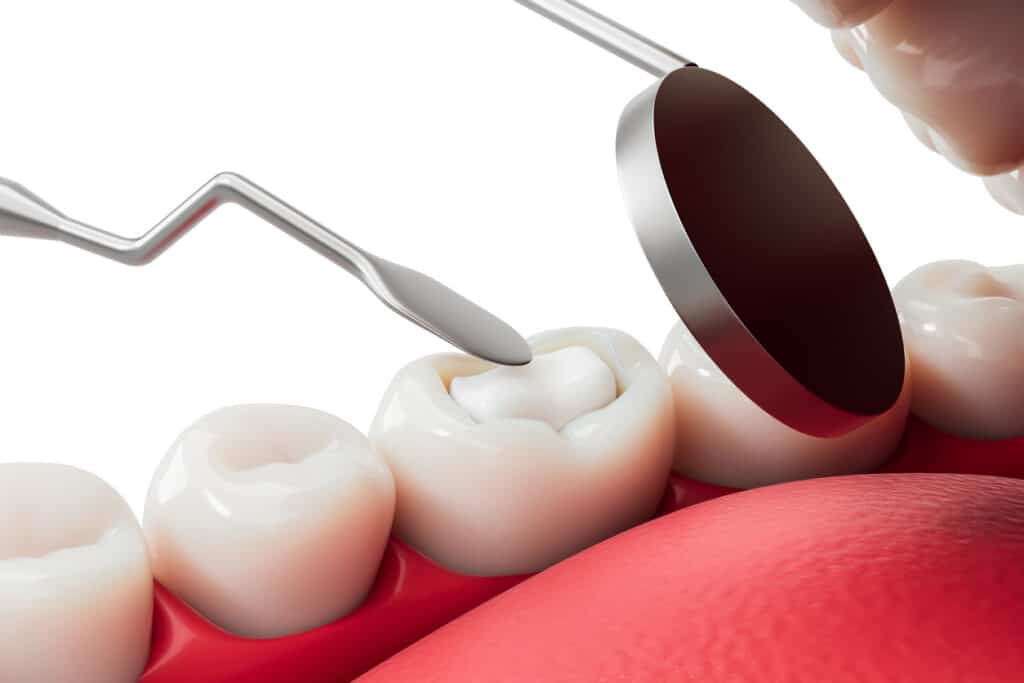
Medical evidence shows that dental fillings are a restorative dentistry treatment used to repair cavities or fix minor chips and cracks in your teeth [1] (Cleveland Clinic, 2021). The dentist at Goldsboro Family Dental removes the decayed portion of the tooth and fills the void with a durable composite material to restore function, relieve pain, and prevent further infection.
Sign #1: You Feel Persistent, Sharp Pain When You Bite Down
A passing twinge of cold sensitivity is often a sign of thinning enamel or receding gums. But if you feel a sharp, isolated jolt of pain every time you chew your food, you are likely dealing with active decay. When a cavity eats through your hard outer enamel, it reaches the softer layer beneath it, called dentin. Dentin contains microscopic tubes that lead directly to your tooth’s nerve center. When you bite down, the physical pressure pushes fluid through those exposed tubes, aggravating the nerve. If this throbbing pain lingers for several minutes after you finish your meal, the structural damage requires a professional filling to seal the tooth and stop the nerve irritation.
Sign #2: The Sudden "Sweet Tooth" Sting
You should be able to enjoy dessert at your favorite downtown Goldsboro bakery without wincing. If drinking a sweet tea or eating a piece of chocolate causes an immediate, sharp sting in a specific tooth, it is a major red flag. Medical literature shows that multiple factors contribute to tooth caries, such as food type and consumption frequency [2] (Mishra et al., 2011). This pain is caused by a biological reaction called osmotic pressure. Because a cavity creates a porous hole in your tooth, high concentrations of sugar pull fluid out of the dentin tubules. This rapid fluid shift triggers a sharp pain response from your dental nerve. Unlike typical temperature sensitivity, a strong reaction to sugar almost always indicates that destructive bacteria have compromised your enamel.
Treatment Comparisons
Understanding your restorative options helps you make the best choice for your health and your wallet. Here is how a composite filling compares to other paths.
Treatment Type | Cost Estimate (Without Insurance) | Durability / Longevity | Maintenance Level |
Wait and See (Monitoring) | $0 upfront | None (Decay will spread) | High (Requires strict diet and fluoride rinses to slow progression) |
Composite Dental Filling | $150 – $300 | 5 to 10 Years | Low (Standard daily brushing and biannual cleanings) |
Root Canal & Dental Crown | $1,000 – $1,500+ | 10 to 15 Years | Moderate (Requires specific flossing techniques around the crown margins) |
Sign #3: Visible Dark Spots or Shadows on Your Enamel
While professional dental cleanings easily polish away daily coffee and tea stains, they cannot remove the discoloration caused by physical tooth decay. Clinical evidence indicates a correlation between black staining and lower caries experience [3] (Zyla et al., 2015). Take a close look at your smile in the mirror in a well-lit room. If you notice a localized dark brown, black, or gray spot, particularly in the deep chewing grooves of your back molars, you are likely looking at a cavity. Sometimes, the decay happens from the inside out, creating a dark, cloudy shadow beneath the surface of the tooth rather than a clear spot. If a dark mark does not brush away and feels sticky or slightly indented when you run your toothbrush over it, it is time for a restorative exam.
Sign #4: Your Dental Floss Constantly Shreds in the Same Spot
Not all cavities are visible to the naked eye. In fact, many form right between your teeth in the tight spaces where food easily gets trapped. These are known as interproximal cavities. Because you cannot see them, you have to rely on tactile warning signs. Pay close attention to your daily flossing routine. If your string of floss smoothly glides between most of your teeth but consistently catches, frays, or shreds in one specific area, you have a problem. As acid destroys your tooth structure, it creates a jagged, sharp crater along the side of the tooth. Your floss tears against this hidden, rough edge, signaling that a filling is needed to restore the smooth contour of the tooth.
Sign #5: A Rough, Chipped, or Sharp Edge on Your Tooth
Your natural tooth enamel is the hardest substance in the human body. Under normal circumstances, it will not simply break or crumble when you eat soft foods. However, as the bacteria inside a cavity produce acid, they leach vital minerals out of your enamel, leaving it weak and brittle. If your tongue suddenly detects a rough patch, or if a small piece of your tooth chips off while eating a normal meal, the internal structure has likely caved in. A dental filling reinforces this weakened architecture. By clearing out the soft, demineralized tissue and bonding a durable composite resin to the area, your dentist restores the physical strength of the tooth before it fractures completely.
FAQs
1. Can a cavity heal on its own without a filling?
No. While very early demineralization (soft spots) can sometimes be reversed with professional fluoride treatments, an actual cavity is a permanent hole in your enamel. Your body cannot regrow lost tooth structure. Once the hole forms, a physical filling is the only way to seal and protect the tooth.
2. How long does a tooth-colored filling last?
With proper care, a high-quality composite resin filling typically lasts between 5 and 10 years. You can extend the lifespan of your dental work by brushing twice a day, wearing a nightguard if you grind your teeth, and keeping up with your six-month preventive cleanings.
3. Is it safe to eat normally after getting a composite filling?
Yes. Because we use a specialized curing light to harden the composite resin instantly, your new filling is fully set before you leave the chair. You can chew on it right away. However, we highly recommend waiting until your local anesthesia wears off so you do not accidentally bite your lip or cheek.
References
[1] Cleveland Clinic. (2021, February 23). Dental fillings: Materials, types, sensitivity & allergy issues. Cleveland Clinic. https://my.clevelandclinic.org/health/treatments/17002-dental-fillings
[2] Mishra, M. B., & Mishra, S. (2011). Sugar-Sweetened Beverages: General and Oral Health Hazards in Children and Adolescents. International journal of clinical pediatric dentistry, 4(2), 119–123. https://doi.org/10.5005/jp-journals-10005-1094
[3] Żyła, T., Kawala, B., Antoszewska-Smith, J., & Kawala, M. (2015). Black stain and dental caries: a review of the literature. BioMed research international, 2015, 469392. https://doi.org/10.1155/2015/469392