
The average composite dental filling lasts about 10 years, depending on chewing habits, oral health, and placement. Medical evidence indicates composite resins last about 11 years [1] (Bhagwat et al., 2025). Proper maintenance (wearing a nightguard, biannual cleanings, etc.) can greatly increase this lifespan by preventing micro-leakage and structural wear.
How Aging Fillings Fall Prey to Secondary Decay Attacks
Your composite resin will naturally weaken its bond with your enamel over time. This induces a microscopic gap at the edge of the filling. Bacteria from the food you eat each day easily slip into these microscopic gaps. These occult gaps are too small for toothbrush bristles to reach, so bacteria multiply quickly. Dentists call this process secondary decay. It silently eats away at the healthy tooth structure underneath your filling. If left unchecked, this hidden infection will eventually reach your dental nerve, turning a simple replacement into a painful emergency.
Daily Habits to Extend the Life of Your Dental Work
Medical literature suggests that an ideal composite restorative material should have wear properties similar to tooth tissue [2] (Dionysopoulos et al., 2021). You can protect your dental investments right from your bathroom. First, switch to a soft-bristled electric toothbrush. Hard bristles can physically wear down the composite resin over time and can irritate your gumline. Second, never use your teeth as tools. Opening plastic packages, biting your fingernails, or chewing on ice places sharp, sudden stress on the edges of your fillings. Finally, if you play contact sports at the Wayne County athletic fields, always wear a custom mouthguard. Shielding your teeth from blunt force keeps your restorations securely in place.
Lifespan Comparisons: Does Location Matter?
The size and location of your cavity play a major role in how long your repair will last. Here is a look at how different composite restorations hold up over time.
|
Restoration Type |
Average Lifespan |
Primary Wear Factor |
Maintenance Level |
|
Anterior (Front Tooth) Filling |
7 to 10+ Years |
Biting into hard foods (apples, crusty bread) |
Low (Avoid using teeth as tools) |
|
Posterior (Back Molar) Filling |
5 to 7 Years |
Heavy chewing force and nighttime grinding |
Moderate (Requires a nightguard if you grind) |
|
Multi-Surface Filling |
4 to 6 Years |
Lack of surrounding natural tooth structure |
High (Requires strict flossing to protect margins) |
Why Your 6-Month Checkup is Crucial for Filling Survival
You cannot always feel a failing filling. During your routine visits to Goldsboro Family Dental, we do much more than polish your enamel. Dr. Taylor uses a specialized dental explorer to gently trace the margins of your existing fillings. We feel for any sticky spots, rough edges, or slight catches that indicate the bond is breaking down. By catching a microscopic leak early, we can often repair the filling’s edge rather than replace the whole restoration.
The Tipping Point: When a Failing Filling Requires a Crown
A tooth can only hold a filling if it has enough strong, healthy enamel left to support it. When an old filling fails and secondary decay sets in, we must remove that new decay before placing a fresh restoration. If the cavity grows too large, the remaining tooth walls become thin and brittle. At this stage, a standard composite filling will no longer hold. To save the tooth from fracturing under your bite pressure, we must transition your care to a custom porcelain crown. Replacing aging fillings promptly keeps your treatment simple and protects your natural tooth structure.
The Seamless Process of Upgrading an Old Restoration
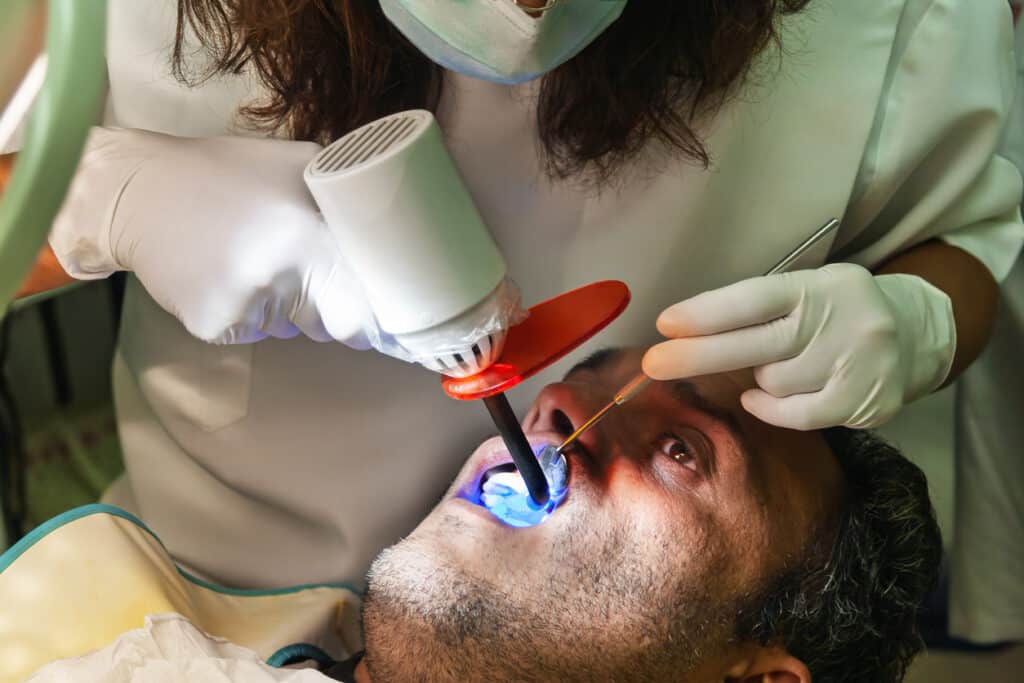
Hearing that you need an old filling replaced often causes unnecessary stress. You might worry about sitting in the dental chair for hours. Fortunately, upgrading a failing restoration is a fast, highly comfortable process. We use precise local anesthesia to keep your tooth perfectly numb. Then, we gently remove the old composite material and clear away any hidden bacteria. We apply a fresh layer of tooth-colored resin, cure it instantly with a specialized light, and polish it smooth. You can get back to your busy day in Goldsboro with a secure, revitalized smile in under an hour.
FAQs
1. How do I know if my composite filling is leaking?
You cannot always see a leaking filling with the naked eye. Common warning signs include sudden sensitivity to cold drinks, a lingering sweet-tooth ache, or a dark shadow forming under the white resin. Routine digital X-rays are the best way to spot micro-leakage before it causes pain.
2. Can a tooth-colored filling just fall out after a few years?
Yes. If you bite down on something very hard, like a popcorn kernel or a piece of ice, the sudden force can break the bond and dislodge an aging filling. If your filling falls out, keep the area clean and call your dentist immediately to have it resealed.
3. Does whitening toothpaste damage my composite fillings?
Whitening toothpastes are highly abrasive. While they will not cause your filling to fall out, the gritty texture can scratch the surface of the composite resin. Over time, these microscopic scratches trap dark pigments, causing your filling to look dull and discolored.
References
[1] Bhagwat, S., Mandke, L., Vandekar, M., Basmatkar, N., Pawar, A., & Khatri, R. (2025). Longevity of Amalgam Versus Composite Resin Restorations in Permanent Posterior Teeth: A Systematic Review. Cureus, 17(7), e88836. https://doi.org/10.7759/cureus.88836
[2] Dionysopoulos, D., & Gerasimidou, O. (2021). Wear of contemporary dental composite resin restorations: a literature review. Restorative dentistry & endodontics, 46(2), e18. https://doi.org/10.5395/rde.2021.46.e18