
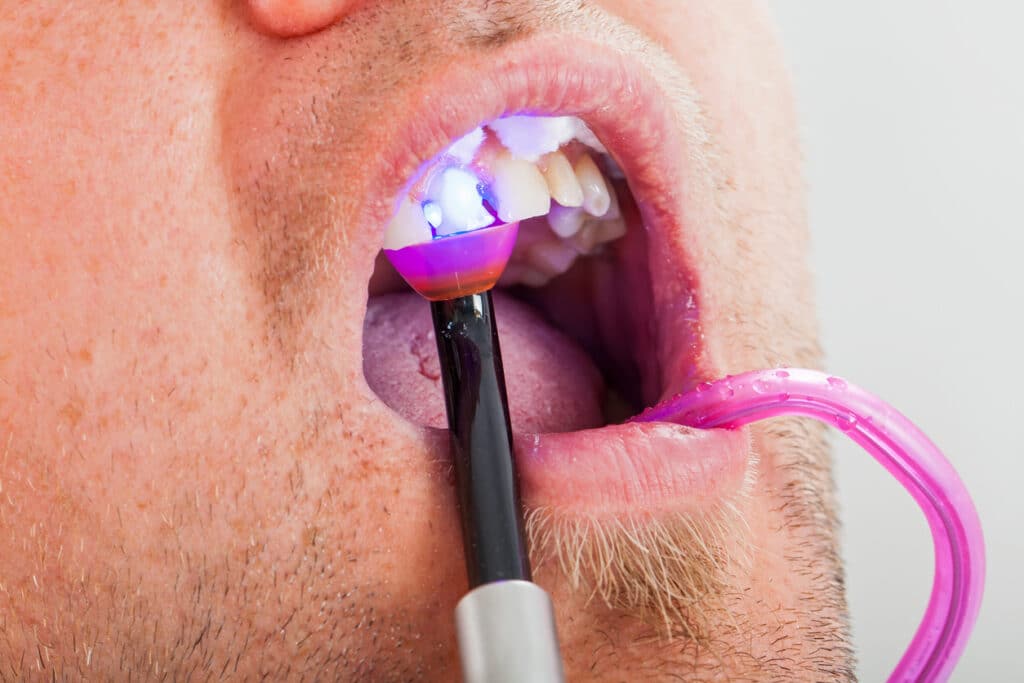
Ignoring a cavity is a progressive dental condition where bacterial decay spreads from the outer enamel into the inner dentin and nerve of the tooth. Without a professional dental filling, an untreated cavity leads to severe pain, dangerous infections, and the potential need for an expensive root canal. Medical literature indicates that consequences of untreated dental caries (CUDC) can range from pulp damage and soft tissue ulceration due to root debris to more severe issues, such as fistulas and abscesses [1] (Jimenez-nunez et al., 2025).
Composite vs. Amalgam: Why We Use Tooth-Colored Fillings
Years ago, dentists primarily used silver metal (amalgam) to fill cavities. While strong, these dark silver spots stand out every time you laugh or speak. Today, Goldsboro Family Dental uses advanced composite resin. This modern, tooth-colored material matches your natural enamel. Clinical literature supports that resin composite, as a tooth-colored material, is more pleasing for patients and performs better clinically [2] (Chan et al., 2010). Composite resin, in fact, bonds directly to your tooth structure and goes beyond cosmetics. This chemical bond lets the dentist preserve more of your natural, healthy tooth during the procedure. It also moves naturally with your bite, so over time the risk of your tooth cracking under pressure is greatly reduced.
Signs Your Old Dental Filling is Failing and Needs Replacement
Dental fillings are durable, but they do not last forever. Daily chewing, ice crunching, and nighttime grinding slowly wear down your fillings. Clinical evidence shows that filling failure can lead to repeat fillings or further treatment, such as a root canal or extraction [3] (Tobias et al., 2024). As a filling ages, the tight seal keeping bacteria out begins to weaken. When this happens, fresh bacteria slip underneath the material, creating a new, hidden cavity. You might notice a sharp edge with your tongue, a visible dark shadow under the old resin, or a sudden twinge when drinking cold water. If you feel a change in an old filling, schedule an exam right away. Replacing a failing filling early prevents the underlying tooth structure from fracturing.
Treatment Comparisons: The Cost of Delay
Being aware of your treatment options demonstrates the true value of early intervention. Here is the difference between a simple filling and what you will have to do if you wait too long:
Treatment Type | Out-of-Pocket Cost Estimate | Durability / Result | Maintenance Level |
Composite Dental Filling | $150 – $300 (Often 80% covered by insurance) | 10 to 15 Years | Low: Requires standard daily brushing and flossing. |
Root Canal & Crown | $1,200 – $2,500+ | Variable, but often 10-15 years (Crown may need eventual replacement) | Moderate: Requires excellent hygiene to protect the restored tooth. |
Tooth Extraction | $150 – $300 (Removal only) | Permanent Loss of Tooth | High: Requires expensive future implants or bridges to prevent jaw bone loss. |
Fixing Front Teeth: Seamless Restorations for Your Visible Smile
Getting a cavity on a front tooth feels very stressful. If you are a busy professional or a Social Sharer, you need a bright, flawless smile for meetings and photos. You might worry that a dental filling will be obvious to everyone you talk to. Fortunately, modern restorative dentistry is highly precise. We select our composite resin to match the shade, tone, and translucency of your front teeth. Our dentists carefully shape the material to mimic the natural curve of your smile. Once polished, the restoration is undetectable, so you can talk and smile with complete confidence.
What to Expect: Handling Mild Sensitivity Post-Filling
You just left your appointment, and you are officially cavity-free. It is very natural to wonder what your mouth will feel like once the numbing medicine wears off. For the first few days, you may notice mild sensitivity to very hot or cold drinks. This happens because the inner nerve of your tooth needs a short moment to calm down after the procedure. This sensation is temporary and fades quickly. You can manage it easily by chewing on the opposite side of your mouth for a day or two and using a desensitizing toothpaste. If you experience a sharp ache that lasts for more than a week, simply call our Wayne County clinic so we can quickly adjust your bite.
Safe Cavity Treatment for Expecting Mothers
Pregnancy brings many changes to your body, including a higher risk for tooth decay. Morning sickness introduces strong acids into your mouth, which quickly wear down your protective enamel. As a mom-to-be, you want to prioritize your baby’s health. You might wonder if getting a filling is safe while you are pregnant. Leading medical and dental associations confirm that routine restorative care, including cavity fillings and local anesthesia, is safe during pregnancy. In fact, treating an active cavity stops dangerous oral bacteria from entering your bloodstream. We take every precaution to ensure you stay comfortable and relaxed, protecting both your total wellness and your growing family.
FAQs
1. Can a cavity heal itself if I start brushing better?
No. While excellent brushing and fluoride use can stop early enamel demineralization (pre-cavities), a true cavity means the tooth structure is physically compromised. Once a hole forms, a professional must clean it and seal it with a filling to stop the decay.
2. How long can I wait to get a filling after my dentist finds a cavity?
Schedule your filling within a few weeks of diagnosis. Decay never stops growing. Waiting several months gives the bacteria time to reach the deeper layers of your tooth, increasing your risk of pain and the need for a root canal.
3. Does getting a cavity filled hurt?
Your comfort is our top priority. We use modern, highly effective local anesthesia to completely numb the tooth and surrounding gums before we begin.
References
[1] Jiménez-Núñez, J. C., González-Aragón Pineda, Á. E., Vázquez-Ortíz, M. F., Flores-Preciado, J. C., Jiménez-Corona, M. E., & Borges-Yáñez, S. A. (2025). Consequences of Untreated Dental Caries on Schoolchildren in Mexico State’s Rural and Urban Areas. Dentistry journal, 13(8), 359. https://doi.org/10.3390/dj13080359
[2] Chan, K. H. S., Mai, Y., Kim, H., Tong, K. C. T., Ng, D., & Hsiao, J. C. M. (2010). Review: Resin Composite Filling. Materials, 3(2), 1228–1243. https://doi.org/10.3390/ma3021228
[3] Tobias, G., Chackartchi, T., Mann, J., Haim, D., & Findler, M. (2024). Survival Rates of Amalgam and Composite Resin Restorations from Big Data Real-Life Databases in the Era of Restricted Dental Mercury Use. Bioengineering (Basel, Switzerland), 11(6), 579. https://doi.org/10.3390/bioengineering11060579