
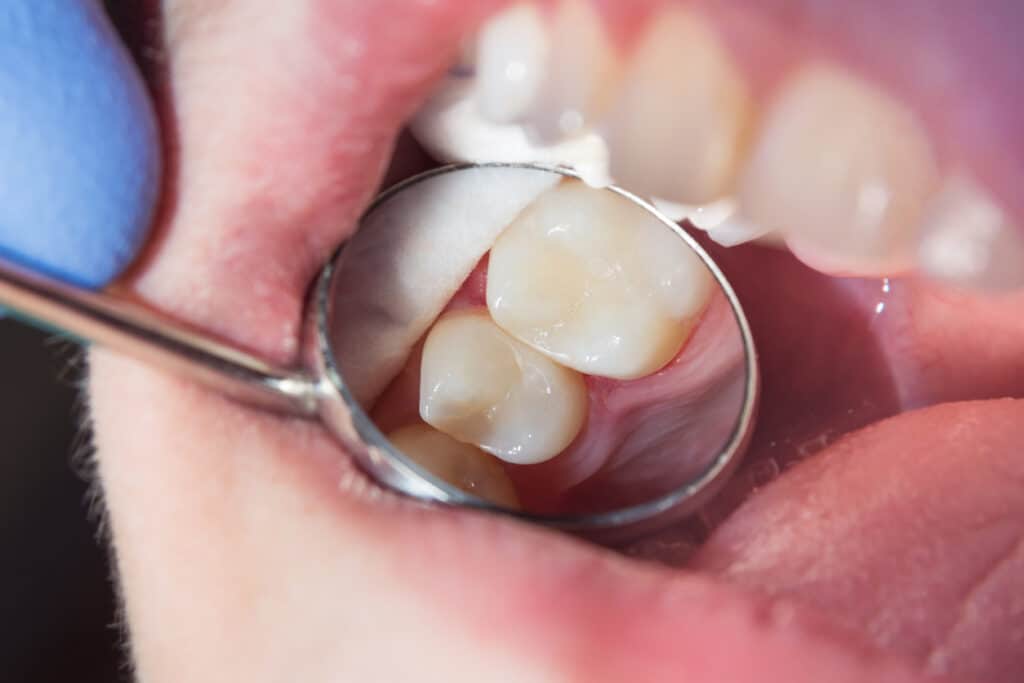
A standard dental filling at Goldsboro Family Dental is a restorative procedure that usually takes about 20 to 60 minutes per tooth. The exact timeframe depends on the size of the cavity, the tooth’s position, and the specific composite material used to repair your enamel. Medical literature also supports that dental caries is a chronic disease that is almost entirely preventable [1] (Weldon et al., 2016).
Preparation for a Fast and Easy Filling Appointment
Your time is valuable. You can take a few simple steps at home to make your restorative visit even faster. First, complete any required consent forms online before you leave your house. This lets you skip the clipboard in our waiting room. Second, eat a light meal before you arrive. You will be numb for a few hours after the procedure, so eating beforehand keeps you comfortable while the local anesthesia wears off. Finally, brush your teeth right before your appointment. A clean mouth allows your dentist to get straight to work, shaving minutes off your total chair time.
Staying Relaxed: How We Make Your Visit Fly By
Sitting in a dental chair often makes people feel anxious. When you feel nervous, ten minutes can feel like an hour. Clinical evidence indicates that the anxiety surrounding dental procedures and settings can give rise to avoidance behaviors [2] (Winkler et al., 2023). We design our clinical experience to help you relax so your appointment feels brief. We use quiet dental instruments and offer comfortable chair support. You are always welcome to wear your headphones and listen to a favorite podcast or music playlist to block out clinic noises. If you need a break, just raise your hand. We will stop instantly. When you feel safe and in control, your procedure moves smoothly and finishes before you know it.
Comparing Restorative Treatments
If you leave decay untreated, a simple 45-minute filling can escalate into a longer, more complex procedure. Here is how standard fillings compare to other restorative treatments.
Treatment Type | Cost Estimate (Without Insurance) | Procedure Time | Durability / Maintenance Level |
Minor Composite Filling (1 Surface) | $150 – $250 | 20 – 45 Minutes | 5 – 7 Years (Low Maintenance) |
Major Composite Filling (2-3 Surfaces) | $200 – $350 | 45 – 60 Minutes | 5 – 7 Years (Low Maintenance) |
Dental Crown (For severe decay) | $1,000 – $1,500 | Two 60-Minute Visits | 10 – 15 Years (Moderate Maintenance) |
Root Canal Therapy (Infected nerve) | $800 – $1,200 | 90 – 120 Minutes | Lifetime (Requires strict home care) |
Can You Get Multiple Cavities Filled at Once?
Finding out you have more than one cavity is stressful. You might worry that you need to schedule three separate appointments. Fortunately, we can often treat multiple cavities during a single visit. If the decay is on the same side of your mouth, we can numb that specific area and repair all the affected teeth at once. This approach adds about 15 to 20 minutes to your total visit, but it saves you from taking another afternoon off work. If the cavities are on opposite sides of your mouth, we usually split the treatment into two quick visits so your whole mouth does not feel numb at the same time.
The First 24 Hours: What to Expect After Your Visit
You just left our Wayne County office with a newly repaired smile. Now what? Because we use advanced composite resin, your new filling hardens completely before you even stand up. You do not have to wait a day to chew on it. However, you should avoid eating anything chewy or hot until your local anesthesia wears off completely. This prevents you from accidentally biting your cheek. You might feel a slight sensitivity to cold drinks for a few days. This is a normal reaction as your tooth nerve settles down. If you feel a sharp pain when you bite down, call us. We can easily adjust the filling height in just five minutes.
When a Simple Filling Takes Longer Than Expected
Sometimes, a cavity hides serious damage. Digital X-rays give us a clear picture, but we cannot see the exact depth of decay until we start cleaning the tooth. If your dentist discovers that the cavity sits very close to your tooth nerve, the procedure will require a little extra time. We must place a special calming liner inside the tooth to protect your nerve before we add the composite resin. If the decay actually reaches the nerve, a standard filling will no longer work. We will pause the procedure, explain the situation, and help you plan for a more protective restorative treatment, such as a dental crown. We always prioritize your long-term health over a rushed timeline.
FAQs
1. Can I get my regular cleaning and a filling on the same day?
Yes. If we discover a small cavity during your routine six-month cleaning, we often have the flexibility to fill it during the same visit. This saves you from having to take a second day off work. Just ask your hygienist if same-day treatment is an option for you.
2. How long will my mouth stay numb after the filling?
Local anesthesia typically lasts for two to three hours after your procedure is finished. You can return to work or school immediately, but you should be careful if you eat while numb to avoid accidentally biting your lip or cheek.
3. Does a composite filling require special care at home?
No. Once the blue curing light hardens your composite filling, it is fully set. You just need to maintain your standard oral hygiene routine, brushing twice a day and flossing daily, to keep the tooth around the new filling healthy and strong.
References
[1] Weldon, J. C., Yengopal, V., Siegfried, N., Gostemeyer, G., Schwendicke, F., & Worthington, H. V. (2016). Dental filling materials for managing carious lesions in the primary dentition. The Cochrane Database of Systematic Reviews, 2016(9), CD012338. https://doi.org/10.1002/14651858.CD012338
[2] Winkler, C. H., Bjelopavlovic, M., Lehmann, K. M., Petrowski, K., Irmscher, L., & Berth, H. (2023). Impact of Dental Anxiety on Dental Care Routine and Oral-Health-Related Quality of Life in a German Adult Population-A Cross-Sectional Study. Journal of clinical medicine, 12(16), 5291. https://doi.org/10.3390/jcm12165291