
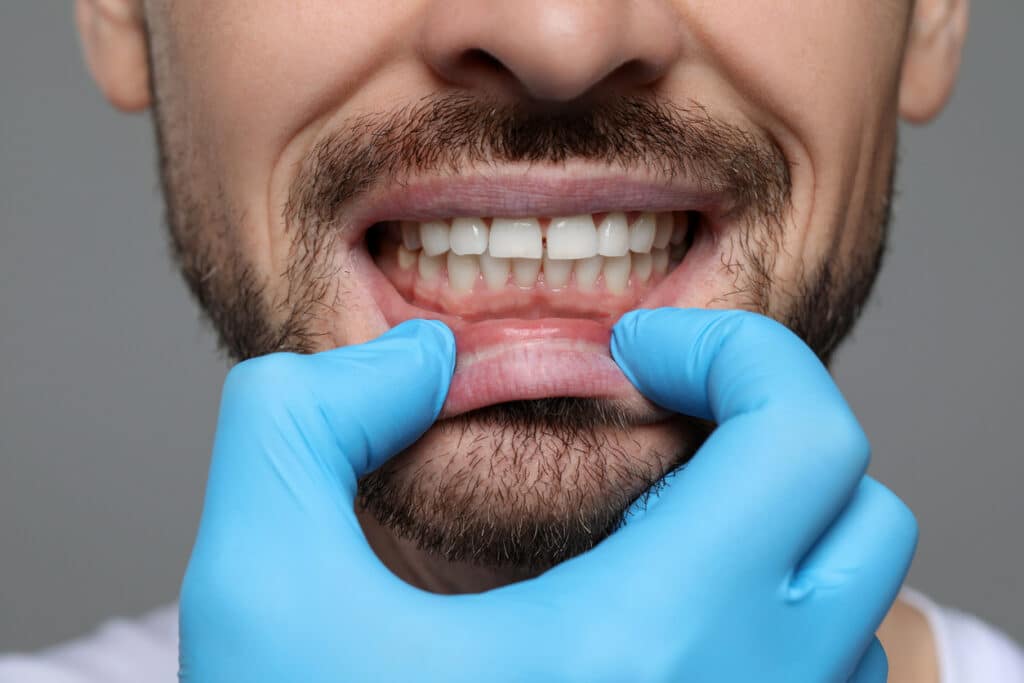
Bleeding gums during a dental cleaning (clinically known as Bleeding on Probing, or BOP) at Goldsboro Family Dental occurs when professional scaling instruments provoke a response from inflamed gingival tissues. Medical literature supports that bleeding on probing (BOP) is an indicator of a tissue inflammatory response to bacterial pathogens [1] (Checchi et al., 2009). You may see slight bleeding due to localized plaque, but if it is generalized, it is usually a sign of active periodontal disease and requires specific therapy to restore your oral health.
Hormones and Medications: Biological Triggers for Your Gums
Sometimes you do all the right things in your daily brushing routine, but still bleed easily when you sit in the dental chair. When this happens, we look beneath the surface of your teeth. The response of your soft tissues to professional instruments depends a lot on your body chemistry. During pregnancy, hormones naturally increase blood flow to your gums. This condition, known as pregnancy gingivitis, makes your tissue hyper-reactive and prone to bleeding even with the gentlest touch. Clinical literature supports that pregnancy gingivitis can progress to more severe periodontal disease if not managed adequately [2] (Varsha et al., 2025). Additionally, common daily prescriptions can alter your oral environment. Blood thinners prescribed for cardiovascular health naturally increase bleeding times. Certain blood pressure medications and antihistamines cause severe dry mouth, which accelerates bacterial growth and localized inflammation. By sharing your updated medical history with us, we can anticipate these biological triggers and adapt your cleaning to keep you perfectly safe.
How We Adjust Your Cleaning When Bleeding Starts
If your gums start to bleed during your appointment, we do not simply ignore it and keep working. A modern, comfortable dental experience requires constant adaptation. When our hygienists notice active bleeding, they immediately pivot their clinical approach to protect your fragile tissue. First, we adjust the settings on our ultrasonic scalers. We lower the vibration frequency to provide a much softer sweep against the tooth root. Next, we use warm-water irrigation to gently flush the bacteria without shocking your sensitive nerve endings. If the bleeding is accompanied by tenderness, we can quickly apply a targeted, topical desensitizing gel right to the gumline. This proactive response stops discomfort instantly. You receive a thorough, medical-grade cleaning without feeling like your mouth was treated roughly.
The 48-Hour Tissue Recovery Protocol
Leaving the clinic after a cleaning where your gums bled means your tissue is in a temporary state of recovery. Just like a minor scrape on your skin, your gums need a brief window of time to heal and close back up. What you do in the first 48 hours determines how fast that healing happens.
- First, adjust your diet for a day or two. Avoid highly acidic foods like citrus fruits, tomatoes, or spicy sauces, as these will sting the freshly cleaned, open pockets. Stick to softer, mild meals.
- Second, do not stop brushing your teeth, but change your technique. Use an ultra-soft bristled brush and use light, circular motions rather than aggressive back-and-forth scrubbing. Finally, rinse your mouth gently with warm salt water before bed. The salt naturally draws out lingering inflammation and creates a soothing environment that speeds up your tissue repair.
Comparisons of Chairside Bleeding Levels
The amount of bleeding you experience tells us exactly what kind of treatment you need. Here is how different levels of inflammation affect your care plan.
Chairside Bleeding Level | Required Treatment | Cost Estimate (Without Insurance) | Result Longevity (Durability) | Maintenance Level |
Trace to None | Routine Preventive Cleaning | $100 – $150 | 6 Months | Low (Brush and floss daily) |
Localized Bleeding | Routine Cleaning + Desensitizers | $100 – $150 | 6 Months | Moderate (Electric toothbrush required) |
Generalized Bleeding | Deep Cleaning (Periodontal Therapy) | $200 – $350 (per quadrant) | Years (If maintained properly) | High (Requires visits every 3-4 months) |
The Danger of "Toughening It Out" During Your Visit
Many patients hold onto a harmful myth that a “good” dental cleaning is supposed to hurt. If you notice your gums bleeding, you might tense up your shoulders and try to just power through the tenderness. We never want you to white-knuckle your way through an appointment at Goldsboro Family Dental. Toughening it out actually increases your physical stress, which raises your blood pressure and can make your gums bleed even more. Instead, we give you total control over the pacing of your visit. If you feel a sharp pinch or uncomfortable pressure in an inflamed area, simply raise your hand. We will stop the instrument immediately. We can easily administer localized numbing rinses or give you a five-minute breathing break. Your peace of mind always comes before our schedule.
Connecting Your Gum Health to Your Wayne County Medical Providers
We view your mouth as the window to your total body health. Sometimes, chronic or unusually heavy bleeding during a routine cleaning is the very first warning sign of an undiagnosed systemic medical issue. If we remove all the plaque and your gums still show signs of aggressive bleeding, we look at the bigger picture. Persistent bleeding on probing is closely linked to metabolic conditions like undiagnosed Type 2 diabetes, vitamin C deficiencies, or early cardiovascular disease. We do not just send you home with a new toothbrush. We act as your proactive healthcare partners. We frequently collaborate with local primary care physicians and specialists operating near UNC Health Wayne. We will gladly share our clinical findings and digital X-rays with your medical doctor, ensuring your whole body gets the accurate, comprehensive care it needs.
FAQs
1. Is it the hygienist's fault my gums are bleeding?
No. Healthy gums are very resilient and do not bleed when touched. If your gums bleed during a professional cleaning, it is a direct result of underlying bacterial inflammation, not the technique of the hygienist.
2. How long is it normal to bleed after a dental cleaning?
If you have early gingivitis, you might experience slightly pink saliva for 12 to 24 hours after your appointment. This is a normal part of the healing process. However, if heavy bleeding continues past the first day, you should contact our office.
3. What should I do at home if my gums bled during my appointment?
First, keep your mouth clean to promote fast healing. Use a soft-bristled toothbrush and brush gently around the gumline. Rinsing with warm salt water for the first two days helps soothe the tissue and reduces lingering inflammation.
References
[1] Checchi, L., Montevecchi, M., Checchi, V., & Zappulla, F. (2009). The relationship between bleeding on probing and subgingival deposits. An endoscopical evaluation. The open dentistry journal, 3, 154–160. https://doi.org/10.2174/1874210600903010154
[2] Varsha, A., Garg, A., & Thakur, R. (2025). Effects of Pregnancy on Oral Health: A Narrative Review. Cureus, 17(10), e94929. https://doi.org/10.7759/cureus.94929