
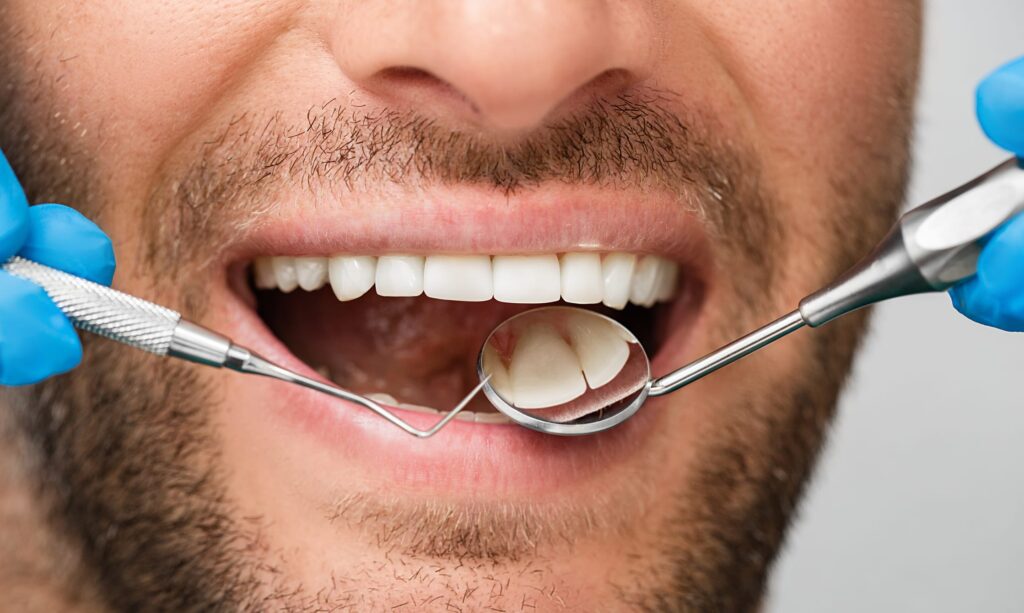
A dental filling at Goldsboro Family Dental is a restorative procedure that repairs tooth decay and restores the tooth’s structural integrity. During this process, the dentist cleans out the decayed portion of the tooth and fills the hole with a strong, tooth-colored composite material. The medical literature supports the view that dental resin composite restorations offer conservative design and reparability [1] (Worthington et al., 2021). This prevents the infection from spreading while preserving the natural tooth.
How to Tell if You Need a Dental Filling
Do you feel a sharp “zing” when you sip ice water or eat a piece of candy? Clinical evidence indicates that dental hypersensitivity (DHS) is associated with dentin exposure, particularly open dentinal tubules, and with dental pulp nerve responsiveness [2] (Liu et al., 2020). Does your daily dental floss catch or tear on a specific tooth? These are classic signs of enamel damage. Tooth decay often starts silently. By the time you feel constant, throbbing pain, the cavity is already deep. You should pay close attention to early warning signs, such as localized sensitivity to sweets or dark spots on your chewing surfaces. If eating your favorite meal suddenly feels uncomfortable, it is time for a professional checkup. Our team uses low-radiation digital X-rays to pinpoint the exact depth of the decay, ensuring we treat the problem long before it worsens.
The Hidden Risks of Delaying Cavity Treatment
Putting off dental work is a common habit. You might hope the sensitivity will just fade away on its own. Unfortunately, your tooth enamel cannot heal itself once a physical cavity forms. When you ignore a small spot of decay, bacteria keep eating through your tooth structure. Clinical evidence supports the association between delays in dental care and higher dental anxiety and lower oral health self-efficacy [3] (Steinvik et al., 2023). Eventually, they breach the sensitive inner nerve. Once the nerve becomes infected, a simple 30-minute filling is no longer a viable medical option. At that stage, you will likely need a root canal and a custom dental crown to save the tooth. Fixing the problem early protects your natural smile and keeps your household healthcare budget completely predictable.
Treatment Comparisons: Understanding Your Restorative Options
Not all tooth repairs are the same. The right treatment depends on the size of the cavity and the condition of your tooth. Here is how standard composite fillings compare to other options:
Treatment Type | Cost Estimate (Without Insurance) | Result Longevity (Durability) | Maintenance Level |
Composite Filling | $150 – $250 | 5 to 7+ Years | Low (Standard daily brushing and flossing) |
Amalgam (Silver) Filling | $100 – $200 | 10 to 15 Years (Cosmetically noticeable) | Low (Standard daily brushing and flossing) |
Dental Crown | $900 – $1,500+ | 10 to 15+ Years (For severe decay) | Moderate (Requires excellent gum care around the crown margins) |
What to Do About Post-Filling Sensitivity
It is perfectly normal to experience a little sensitivity right after your appointment. Your tooth just underwent a medical procedure, and the nerve needs a brief window of time to calm down. You might notice a quick twinge when drinking cold beverages or biting into crunchy foods. This sensation usually fades away on its own within a few days. To keep yourself comfortable, we recommend chewing your food on the opposite side of your mouth for the first 24 hours. You can also brush with a desensitizing toothpaste containing potassium nitrate to soothe the nerve faster. If your bite feels high or the sensitivity lingers past a week, simply call our Goldsboro clinic for a fast, simple adjustment.
Upgrading Your Smile: Replacing Old Silver Fillings
Do you have dark, gray metal fillings from childhood? Older amalgam fillings do their job, but they easily stand out when you laugh, speak, or smile for a photo. Beyond cosmetic concerns, metal fillings actually expand and contract with temperature changes, especially between hot and cold. Over many years, this daily movement can create microscopic cracks in your surrounding natural tooth structure. At Goldsboro Family Dental, we can safely remove these aging metal restorations. We replace them with modern, durable composite resin. This upgrade seals your tooth tightly and instantly revitalizes your appearance, leaving you with a clean, natural-looking smile.
Gentle Cavity Repairs for Wayne County Kids
Finding out your child has a cavity is a stressful moment for any parent. You might worry they will feel scared or refuse to sit still in the dental chair. We recognize this anxiety and design our pediatric restorative visits to be totally stress-free. Our team uses child-friendly language, explaining every tool we use so your little one never feels surprised or overwhelmed. Our precision numbing techniques and rapid resin application mean the actual repair is over before they know it. We partner closely with parents to turn a potentially fearful moment into a proud, positive accomplishment for your growing child.
FAQs
1. Where can I get a cavity filled in Goldsboro, NC?
You can get expert, tooth-colored cavity fillings right here at Goldsboro Family Dental. Conveniently located near the Wayne Memorial Drive medical corridor, our team offers fast, comfortable restorative treatments for patients of all ages.
2. Do tooth-colored composite fillings hurt?
No, getting a filling should not be painful. We use precise local anesthesia to completely numb the affected tooth and surrounding gum tissue before the procedure begins. You will only feel slight pressure, never sharp pain.
3. How long does a composite filling last?
With excellent oral hygiene, a composite resin filling typically lasts between 5 and 7 years, though many last much longer. Brushing twice a day, flossing, and attending your six-month checkups will protect your filling from daily wear and tear.
References
[1] Worthington, H. V., Khangura, S., Seal, K., Mierzwinski-Urban, M., Veitz-Keenan, A., Sahrmann, P., Schmidlin, P. R., Davis, D., Iheozor-Ejiofor, Z., & Rasines Alcaraz, M. G. (2021). Direct composite resin fillings versus amalgam fillings for permanent posterior teeth. The Cochrane database of systematic reviews, 8(8), CD005620. https://doi.org/10.1002/14651858.CD005620.pub3
[2] Liu, X. X., Tenenbaum, H. C., Wilder, R. S., Quock, R., Hewlett, E. R., & Ren, Y. F. (2020). Pathogenesis, diagnosis and management of dentin hypersensitivity: an evidence-based overview for dental practitioners. BMC oral health, 20(1), 220. https://doi.org/10.1186/s12903-020-01199-z
[3] Steinvik, L. M., Svartdal, F., & Johnsen, J. K. (2023). Delay of Dental Care: An Exploratory Study of Procrastination, Dental Attendance, and Self-Reported Oral Health. Dentistry journal, 11(2), 56. https://doi.org/10.3390/dj11020056